
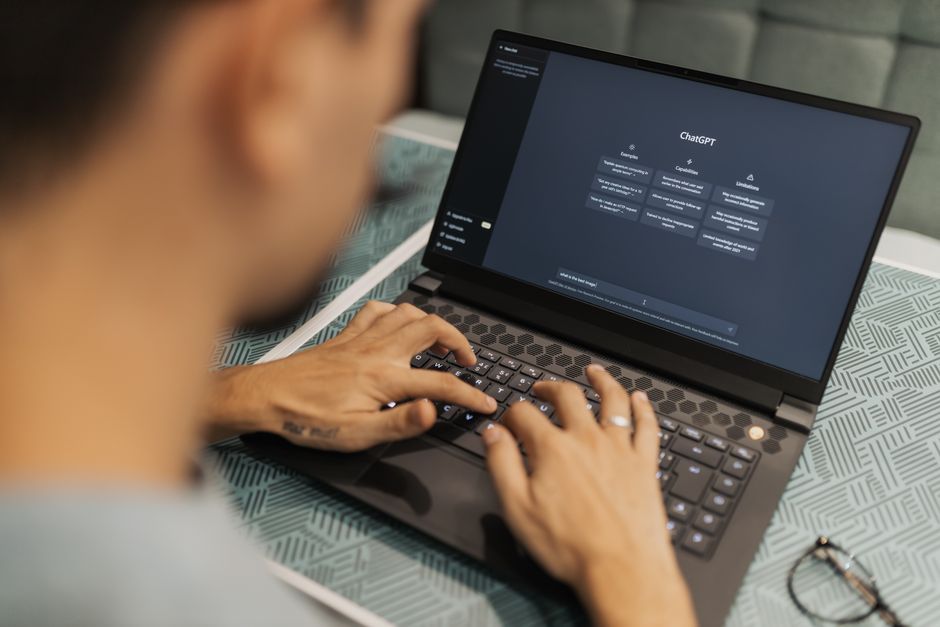
ChatGPT for Booking/Airbnb Descriptions: 8 Prompts That Work (2026)
BookiApp Tim
Vacation Rental Guest App
Key takeaway
This guide provides 8 specific ChatGPT and Gemini prompts for creating property titles and descriptions that increase bookings. Learn how to avoid generic phrases like "oasis of peace" using negative instructions, how to properly localize text for German and English markets, and what the limits are for using AI to respond to reviews. It is crucial to manually verify all AI-generated data, such as distances and amenities, to avoid inaccurate information and potential guest complaints.
Key points
- 1Structure is key: The best AI prompts specify the tone, target audience, key features, and what to avoid.
- 2Use negative constraints: Use instructions like "DO NOT USE the phrase 'perfect vacation' or 'oasis of peace'" to avoid generic text.
- 3Localize with context: For a natural-sounding translation, give the AI context. Prompt: "Translate this description into German for a Bavarian family that values proximity to the beach and restaurants."
- 4Fact-check everything: AI can "hallucinate" amenities. Always manually verify if the listed "waffle maker" exists or if the "200m distance to the beach" is accurate.
Table of contents
Using AI tools like ChatGPT and Gemini to write descriptions for Booking.com and Airbnb is no longer a novelty, but a standard practice. However, the difference between an average and an outstanding result lies solely in the quality of the prompt you provide.
Generic queries produce generic descriptions that fail to attract guests. Specific, structured prompts can generate text that is nearly indistinguishable from that of a professional copywriter, saving hosts in Croatia hours of work.
This guide provides proven prompts and strategies for creating descriptions that not only inform but also sell the experience of staying at your property.
— 015 Prompts for a Title That Attracts Clicks
A listing title is the most critical element for grabbing attention on platforms like Booking.com and Airbnb, where competition is fierce. A good title prompt must give the AI clear instructions about the target audience, key advantages, and desired tone. The goal is to highlight your property's unique selling proposition (USP) in under 50 characters.

Here are 5 prompt structures that yield the best results for the Croatian market:
1. Location-Focused Prompt:
* Generate 5 short titles for an Airbnb listing in Rovinj. The apartment has 2 bedrooms and a terrace with a view of the old town core. The target audience is couples from Germany and Austria. Emphasize the view and romantic atmosphere. Avoid generic phrases. Format: [Key Advantage] - [Property Type] w/ [Feature].
2. Amenity-Focused Prompt:
* Write 5 titles for Booking.com for a villa with a pool near Pula. The villa has 4 bedrooms, a heated pool, and an outdoor grill. It is ideal for two families with children. Highlight privacy and kid-friendly amenities. The tone should be relaxing and family-oriented.
3. Experience-Focused Prompt:
* Create 5 titles for an apartment in Split, a 3-minute walk from Diocletian's Palace. The main advantage is the authentic experience of living within the palace walls. The target audience is young travelers (25-35) from the US and UK. Use words like "heart of the city," "authentic," "pulse of the city."
4. Value-Focused Prompt:
* I need 5 title options for a studio apartment in Hvar, a 10-minute walk from the center. It's not luxurious, but it's clean, tidy, and has the best price in the area. The target audience is backpackers and students. Emphasize proximity to the beach and affordability.
5. Combined Approach Prompt:
* Compose 5 titles for a holiday home on Brač. It has a private beach, is pet-friendly, and features high-speed Starlink internet. The target audience is digital nomads and families with pets. Combine all three advantages into one concise title (e.g., "Pet-Friendly Oasis w/ Private Beach & Fast WiFi").
80%
less time spent on writing
15%
potential increase in click-through rate (CTR)
90%
fewer generic phrases with a specific prompt
— 023 Prompts for the Perfect Description: Hook, Space, and Location
A structured description that guides the guest through a story is crucial for conversion. The best approach is to divide the prompt into three parts: the introduction (the hook), a detailed description of the space, and a useful description of the location. This gives the AI a clear framework and prevents it from mixing up information, a common issue with general instructions.
Prompt 1: The Introductory Paragraph (The Hook)
The goal is to capture attention in the first two sentences and convey the primary emotion or experience of the stay. This is where you sell the experience, not just the beds.
Write an introductory paragraph (max 3 sentences) for an apartment in Dubrovnik with a view of the city walls. The tone is elegant and premium. Mention sipping coffee on the balcony as the sun rises over Lokrum island. The target audience is couples celebrating an anniversary. DO NOT USE the words "unique," "perfect," or "unforgettable."
Prompt 2: Detailed Description of the Space
Details are important here, but they must be presented in an engaging way. Instead of a dry list, the AI should be prompted to describe how the space is used.
Write a detailed description of the space for an 80m² apartment. Use this information: Master bedroom: king-size bed (180x200cm), memory foam, blackout curtains. Second bedroom: two single beds (90x200cm). Kitchen: fully equipped, Nespresso machine, dishwasher. Living room: sofa bed, 65" Smart TV with Netflix. Bathroom: walk-in rain shower. Describe how a family can relax after a day at the beach.
Prompt 3: Useful Description of the Location
Guests don't know your neighborhood. The location description must be a practical guide, not a tourist brochure. Specific distances are key.
Write a location description for an apartment in Trogir, located on the island of Čiovo. Provide exact distances in meters or minutes on foot to the following points: Okrug Gornji beach (300m), Tommy supermarket (150m), Trogir waterfront (15 min walk), Split Airport (10 min drive). Mention that the apartment is in a quiet, traffic-free street but close to all amenities. Recommend one local restaurant (Konoba "Duga").
BookiApp Data
An analysis of 500+ listings in the BookiApp system shows that descriptions with specific distances (e.g., "250m to Kašjuni beach") have a 12% higher booking rate than those with vague phrases like "near the beach."
— 03How to Make AI Not Sound Like a Robot
The biggest problem with AI-generated text is its tendency to use generic phrases and clichés like "oasis of peace," "perfect getaway," or "jewel of the Adriatic." The solution lies in using negative prompts, where you explicitly forbid the AI from using certain words and styles.
Negative prompts act as a filter, forcing the model to find more creative and authentic ways of expression. By including a "WHAT NOT TO DO" instruction in your prompt, you dramatically improve the quality and originality of the text. It's the fastest way to go from a robotic to a human-like tone.
| Bad (Generic) Prompt | Good (Specific & Negative) Prompt |
|---|---|
Write a description for a seaside apartment. | Write a description for an apartment in Baška Voda. Highlight its large balcony with a view of Biokovo mountain. FORBIDDEN PHRASES: 'oasis of peace', 'hidden gem', 'perfect escape', 'unforgettable experience'. Write in a simple, direct style. |
Describe the location. | Describe the location of an apartment in Zadar, in the Puntamika neighborhood. Focus on practical information for a family. AVOID: Superlatives and overly poetic language. Be informative like a local guide. |
The best way to control an AI tool is by defining its boundaries. Telling it what not to write is just as important as telling it what to write.
— 04Localization and Translation: How to Get Natural-Sounding Text
Directly translating a Croatian description into English or German using tools like Google Translate often results in unnatural and stiff text. AI tools like ChatGPT and Gemini can produce far superior translations if given the right context—who the target audience is and what cultural nuances should be considered.

Instead of a simple command like "Translate this," use a prompt that defines the reader. For example, Germans often appreciate technical details and efficiency (e.g., exact bed dimensions, brand of appliances), while Americans respond better to storytelling and experiences. According to data from the Ministry of Tourism and Sport, guests from German-speaking countries account for over 20% of overnight stays, making high-quality localization even more critical.[1]
Example of a Good Localization Prompt:
Translate the following apartment description into German. The target audience is a family with two children (10-15 years old) from Bavaria. They are accustomed to high standards of cleanliness and organization. In the translation, emphasize the proximity to a supermarket for groceries, the safety of the neighborhood, and the reliability of the WiFi connection for remote work and the children's entertainment. Original text: {Paste your Croatian description here}.
This approach ensures the translation is not only linguistically accurate but also culturally adapted, which directly impacts trust and booking numbers from key source markets.
— 05Using AI for Review Responses: Where Is the Line?
Using AI to respond to reviews can save time, but it requires caution. AI is excellent for generating quick and polite responses to positive reviews (4 and 5 stars). However, for negative or complex reviews, a personalized human touch is irreplaceable. An automated response to a serious complaint can come across as insensitive and further escalate the situation.
Good practice is to use AI as an assistant, not a complete replacement:
- ✅ Good for: Responding to positive reviews. Prompt:
A guest left a 5-star review and praised the cleanliness and location. Write a short, grateful response in English. Mention the guest by name ({Guest Name}) and say you hope they'll return. - ⚠️ Use with caution for: Mixed reviews (e.g., 3 stars). AI can provide a draft, but it must be manually customized to address the specific criticisms.
- ❌ Bad for: Negative reviews (1 and 2 stars). These reviews require empathy, an understanding of the problem, and a personalized response that AI cannot provide. Your reply to such reviews affects the perception of all future guests.
— 06The Final Check: What Can AI Get Wrong?
A manual check is mandatory before publishing any text generated by artificial intelligence. AI models, though powerful, are prone to errors that can damage your listing's credibility. Accuracy is crucial, both for guest satisfaction and for compliance with the official Rulebook on Categorization.
These are the most common mistakes to watch out for:
- Hallucinations: AI can invent facts or events. For example, it might write that you can see the sea from your balcony when you can't, or mention a city festival that isn't happening.
- Fake Amenities: A common problem is the addition of amenities the property doesn't have. AI might assume a modern kitchen must have a "waffle maker" or a "smoothie blender" and list it in the description.
- Incorrect Distances: The model may miscalculate or estimate distances to the beach, store, or city center. Always verify these details using Google Maps.
- Stylistic Mismatches: Sometimes, AI can use a tone that is too formal or too informal for your brand or target audience.
Using AI tools as an assistant, not an author, is the best approach. They provide an excellent first draft, save time, and offer new ideas, but the host always has the final say and responsibility for accuracy. This ensures the description faithfully represents the property, which is the foundation for great reviews and a successful season.
Frequently asked questions
1Can ChatGPT and Gemini completely replace a human for writing descriptions?
No. AI is an extremely powerful tool for creating a first draft, generating ideas, and saving time, but it cannot replace human knowledge of a property's specifics and local context. The final version should always be reviewed and edited by a person.
2Which AI model is better for hosts, ChatGPT-4o or Gemini 1.5 Pro?
Both models produce excellent results. ChatGPT-4o is often more creative in generating catchy titles and marketing copy, while Gemini 1.5 Pro excels at processing longer documents and structuring information. It's best to try both with the same prompt to see which one delivers results closer to your style.
3How often should I refresh my property descriptions using AI?
It is recommended to review your descriptions at least once a year, before the main booking season begins. Descriptions should also be updated after any significant changes to the property, such as a renovation or the addition of new amenities (e.g., air conditioning, faster internet).
4Can AI help with responses to negative reviews?
AI is not recommended for directly responding to negative reviews. It can be used to analyze the review and suggest a response structure, but the reply itself must be written by a human to show empathy and address the specific issue raised by the guest.
BookiApp Tim
Vacation Rental Guest App
The BookiApp Team combines hands-on hosting experience with market data analysis. We write practical guides for small-scale hosts of apartments, villas, and rooms—no fluff, just actionable numbers and verified sources.
Related articles

Vacation Rental Insurance: What Airbnb and Booking Don't Cover (2026)
Think Airbnb AirCover or Booking.com's insurance has you covered? Discover what these platforms miss, from guest liability to property damage, and what policy you actually need.
Read more
How to Get Guests to Book Direct and Save 18% on Commissions
A guide for vacation rental hosts in Croatia: Learn how to legally encourage guests to book direct, avoid Booking.com's 15-18% commission, and build a loyal guest base.
Read more