

A Hot Tub in Your Vacation Rental: Is It a Good Investment for 2026?
BookiApp Tim
Vacation Rental Guest App
Key takeaway
A hot tub can increase nightly rates by 15-30% (€30-€100), but the initial investment ranges from €800 for inflatable models to €12,000 for hard-shell units. Monthly electricity costs are €80-€150, with an additional €50-€100 quarterly for chemicals. While it can generate up to 40% more listing clicks, it adds 2-3 hours to your cleaning turnover, a key operational cost.
Key points
- 1Investment: Ranges from €800 for basic inflatable models to over €12,000 for premium hard-shell versions.
- 2Operational Costs: Plan for €80-€150 per month for electricity and an additional €50-€100 quarterly for chemicals and filters.
- 3Price Increase: Properties with a hot tub command an average of 15-30% higher nightly rates, depending on location and season.
- 4Hidden Labor: Expect 2-3 hours of extra work (draining, cleaning, refilling) for each guest turnover, which impacts profitability.
- 5Marketing Boost: Listings with a hot tub on platforms like Airbnb and Booking.com receive up to 40% more views.
Table of contents
A hot tub, or jacuzzi, is no longer a luxury reserved exclusively for five-star hotels. A growing number of vacation rental owners in Croatia are considering this investment as a way to differentiate themselves in the market, extend the season, and, most importantly, increase their nightly rates.
However, the decision to install one is not simple. Along with the initial investment come regular maintenance costs and significant operational effort. This guide analyzes the real numbers behind owning a hot tub in a Croatian vacation rental, based on market data for 2026.
— 01Three Tiers of Investment: Inflatable vs. Hard-Shell vs. Swim Spa
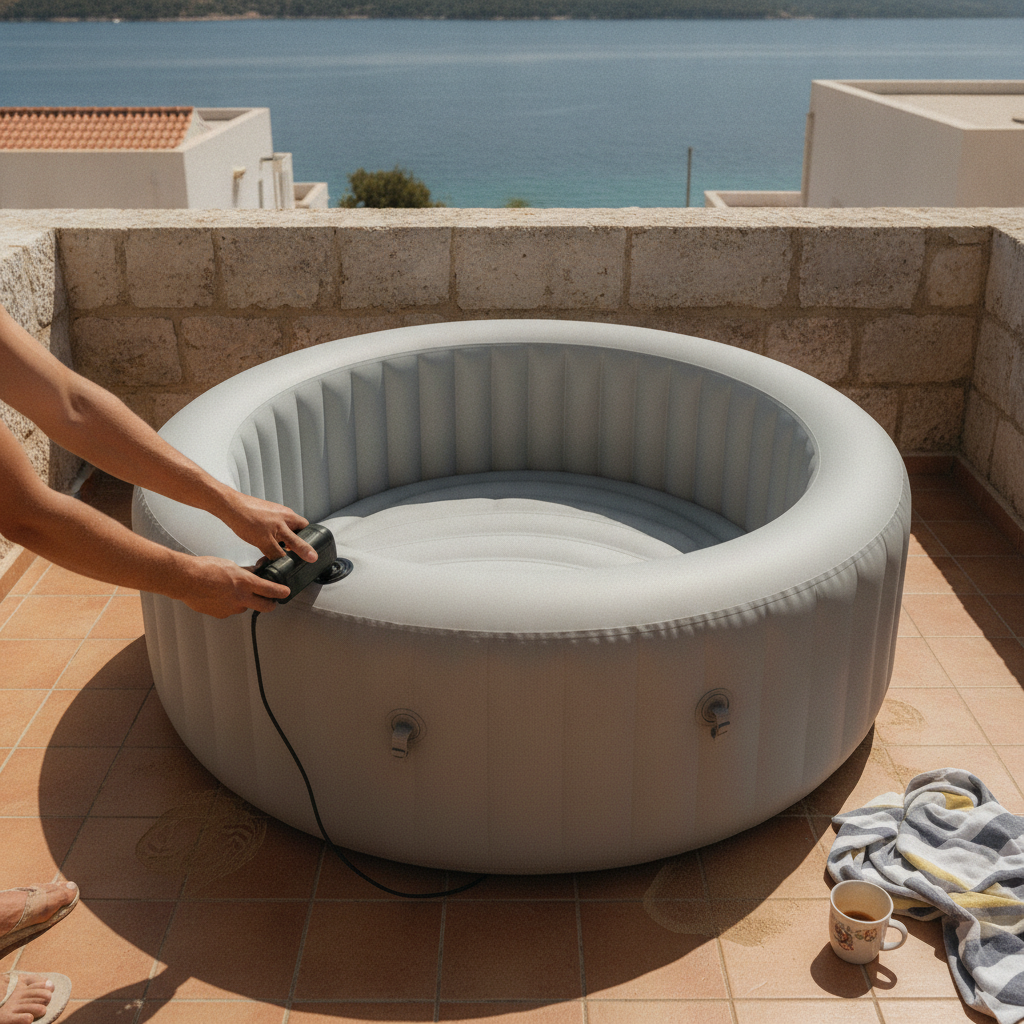
The initial investment for a hot tub ranges from €800 for portable inflatable models to over €20,000 for swim spas. Your choice will depend on your budget, available space, and target guest demographic. Hard-shell models are the most common choice for quality vacation properties due to their balance of price, durability, and aesthetics.
| Hot Tub Type | Price Range (2026) | Capacity | Durability & Material | Key Advantage |
|---|---|---|---|---|
| Inflatable | €800 - €2,000 | 2-6 people | PVC, vinyl | Low initial investment, portability |
| Hard-shell | €5,000 - €12,000 | 4-8 people | Acrylic, fiberglass | Durability, better insulation, stronger jets |
| Swim Spa | €15,000 - €30,000+ | 4-10 people | Acrylic, composite | Combines a pool and hot tub, for swimming |
Inflatable models are an entry point, but their lifespan rarely exceeds two to three seasons of intensive use. Hard-shell models are the industry standard and what guests expect when they filter listings for a "jacuzzi." A swim spa is a premium category aimed at luxury villas, not standard apartments.
— 02The Real Costs of Maintenance in 2026: Electricity, Water, and Chemicals
The monthly electricity cost to maintain a hot tub's temperature is between €80 and €150, while the quarterly cost of chemicals and filters adds another €50 to €100. These ongoing expenses are the biggest factor that hosts underestimate. Modern, well-insulated hot tubs significantly reduce consumption, but the cost remains.
Cost Breakdown:
- Electricity: The largest expense. The heater (typically 2-3 kW) and pumps are the main consumers. In the summer months (June-August), the cost is lower (around €80-€100/mo). In the shoulder seasons (April, May, September, October), when the outside temperature is lower, the cost rises to €120-€150/mo. These calculations are based on an average kWh price of €0.15.
- Chemicals: Essential for water hygiene. A basic set includes chlorine or bromine as a disinfectant, pH minus/plus regulators, and agents to prevent algae and scale. A starter kit costs around €100, with quarterly refills costing about €50-€70.
- Water: The cost of filling depends on the volume (usually 800-1500 liters) and local water prices. With a complete water change between each group of guests, this cost can reach €30-€50 per month in peak season.
- Filters: They need to be cleaned regularly (once a week) and replaced every few months. A set of filters costs €30-€60.
These operational costs must be factored into your nightly rate for the investment to remain profitable.
— 03How Much Can a Hot Tub Increase Nightly Rates and Occupancy?
A vacation rental with a hot tub can command a 15-30% higher nightly rate, which in practice means an extra €30 to €100 per night, depending on the location and property quality. The return on investment (ROI) for a mid-range hard-shell model (around €7,000) is typically achieved within two to three full seasons.
15-30%
Average increase in nightly rate
2-3
Seasons needed to recoup the investment
+40%
More clicks on listings with a hot tub
Regional differences are pronounced. In Istria and Kvarner, where guests seek properties with extra amenities for the pre-season and post-season, a hot tub has the greatest impact. In Dalmatia, especially on islands like Hvar or Brač, the effect is strong in luxury villas, while it has less impact in city apartments in Split or Dubrovnik due to space constraints.
Sample ROI Calculation (100-day season): - Investment: €7,000 (hard-shell model) + €500 (installation) = €7,500 - Price Increase: €50/night - Additional Seasonal Revenue: €50 x 100 days = €5,000 - Annual Maintenance Costs: (€120/mo electricity x 5 mo) + (€70/quarter chemicals x 2) = €600 + €140 = €740 - Net Profit (Year 1): €5,000 - €740 = €4,260
According to this rough calculation, the investment pays for itself in less than two seasons. It's important to note that this calculation does not include platform commissions from sites like Booking.com (15-18%) or Airbnb (15%).
— 04The Marketing "Wow Factor" vs. Operational Reality
Listings with a hot tub get significantly more attention and clicks because guests actively use the "jacuzzi" filter in their searches. It's a powerful marketing tool that immediately positions your property in a higher category. However, behind this attractive feature lies an operational challenge: the time required for cleaning.
The biggest hidden cost of a hot tub isn't money, but the time required to maintain hygiene standards between each guest changeover.
The standard procedure between guests includes: 1. Complete water drainage (30-60 minutes) 2. Cleaning the shell and jets with disinfectant (30 minutes) 3. Refilling with water (60-90 minutes) 4. Initial heating of the water to the desired temperature (several hours, depending on the model and outside temperature)
The entire process adds a minimum of 2-3 hours of work to the standard apartment cleaning. If a host uses a cleaning service, this extra labor represents a direct cost of €30-€50 per turnover. Due to the time required to heat the water, it's often impossible to have a same-day turnover, which can reduce overall occupancy.
BookiApp Data
From an analysis of guest inquiries in the BookiApp system, hot tub hygiene is among the top 3 reasons for complaints in properties that offer one. Guests expect impeccably clean water and visible proof of maintenance.
— 05When Is a Hot Tub a Bad Investment?
Despite all the benefits, a hot tub is not a universal recipe for success. There are scenarios where this investment is unprofitable or even counterproductive.
A hot tub is NOT a good investment if: - You lack a private outdoor space: Placing it on a shared terrace or in a small apartment without adequate ventilation is a bad idea. Guests want privacy. - You target budget travelers: Guests looking for the lowest price will not pay 30% more for a hot tub. Your property's price and quality must align with this premium offering. - You are in an urban core with noise restrictions: The operation of pumps and evening use can lead to neighbor complaints in densely populated buildings, such as in the old town of Split or Trogir. - You don't have the time or resources for maintenance: If you aren't prepared to dedicate an extra 2-3 hours per turnover or pay someone to do it, the quality of service will drop, resulting in bad reviews. The official regulations on property categorization (Pravilnik o kategorizaciji) also prescribe maintenance standards for pools and similar amenities [1].
Installing a hot tub is a business decision that requires careful calculation. When implemented correctly in the right property, it can significantly increase revenue and extend the season. However, underestimating the operational costs and labor involved is the fastest way to turn a dream of higher earnings into a maintenance nightmare.
Sources
Frequently asked questions
1How often do I need to change the water in a rental hot tub?
Health standards and tourism best practices recommend changing the water after every group of guests. This ensures maximum hygiene and prevents potential complaints or health issues. For private use, water is changed every 1-3 months, but this standard is not acceptable for commercial rentals.
2Do I need a special permit to install a hot tub?
For standard, portable, or 'plug-and-play' hard-shell hot tubs, a building permit is generally not required. However, it is always advisable to check local zoning regulations, especially for installations on rooftop terraces or if it requires significant structural modifications. Adding such an amenity may also affect your property's official categorization.
3Can guests use the hot tub in the winter?
Yes, using a hot tub in winter is one of its biggest advantages and a key tool for extending the season. Modern models are well-insulated and designed to operate in low temperatures. However, the electricity cost to maintain the water temperature will be considerably higher than in the summer.
4How should I explain the hot tub rules to guests?
Create a clear and concise set of house rules specifically for the hot tub. Include rules such as showering before entry, prohibiting glass containers, limiting the number of people, and providing instructions for operating the jets and lights. It's best to laminate the rules and place them in a visible spot near the hot tub, as well as send them to guests digitally before their arrival.
BookiApp Tim
Vacation Rental Guest App
The BookiApp Team combines the experience of active hosts with market data insights. We write practical guides for small-scale owners of apartments, villas, and rooms—no fluff, just concrete numbers and verified sources.
Related articles

Vacation Rental Insurance: What Airbnb and Booking Don't Cover (2026)
Think Airbnb AirCover or Booking.com's insurance has you covered? Discover what these platforms miss, from guest liability to property damage, and what policy you actually need.
Read more
How to Get Guests to Book Direct and Save 18% on Commissions
A guide for vacation rental hosts in Croatia: Learn how to legally encourage guests to book direct, avoid Booking.com's 15-18% commission, and build a loyal guest base.
Read more