

How to Write a Local Guide That Drives Direct Bookings (2026)
BookiApp Tim
Guest Experience Platform for Vacation Rentals
Key takeaway
Creating local guides is an SEO strategy that reduces dependency on high-commission platforms (15-18%). By targeting long-tail keywords like 'family-friendly restaurants in Rovinj,' hosts position themselves as local authorities. A quality guide of 1500+ words can generate 200-500 targeted visits per month after 6-9 months, potentially leading to 2-4 direct bookings monthly.
Key points
- 1Long-tail keywords: Focus on specific queries like 'best dog-friendly beaches in Istria' instead of a generic 'Istria beaches' to attract highly motivated guests.
- 2Original photos: Your own photos get up to 35% more engagement than stock photos and build crucial authenticity with potential guests.
- 3Subtle promotion: Weave your property into the guide as a logical solution, e.g., 'Our apartment is just a 5-minute walk from Kašjuni beach.'
- 4Pinterest distribution: Visual guides can achieve up to 85% greater reach on Pinterest, a key channel tourists use in the trip-planning phase.
- 5Realistic traffic: Expect 50-100 monthly visits in the first 3 months, with realistic growth to 200-500 targeted visits after 9 months of SEO maturation.
Table of contents
Relying on Online Travel Agencies (OTAs) like Booking.com and Airbnb comes at a cost. In Croatia, commissions range from 15% to 18%, meaning a €1,000 booking costs you €150 to €180 in platform fees.
A direct booking strategy is no longer an option but a necessity for increasing profitability. One of the most effective tools for achieving independence is content marketing—specifically, creating detailed local guides on your own website.
This approach positions you as a local expert, builds trust, and attracts organic traffic from Google. These are guests actively seeking information about the destination, putting them one step closer to booking.
— 01How to Choose a Topic That Ranks on Google
Choosing the right topic relies on analyzing the "long-tail" keywords guests use when planning their trips. These are specific, less competitive queries like "best restaurants with a view in Dubrovnik" instead of the generic "Dubrovnik restaurants." Such queries attract highly motivated visitors who are closer to making a booking decision.
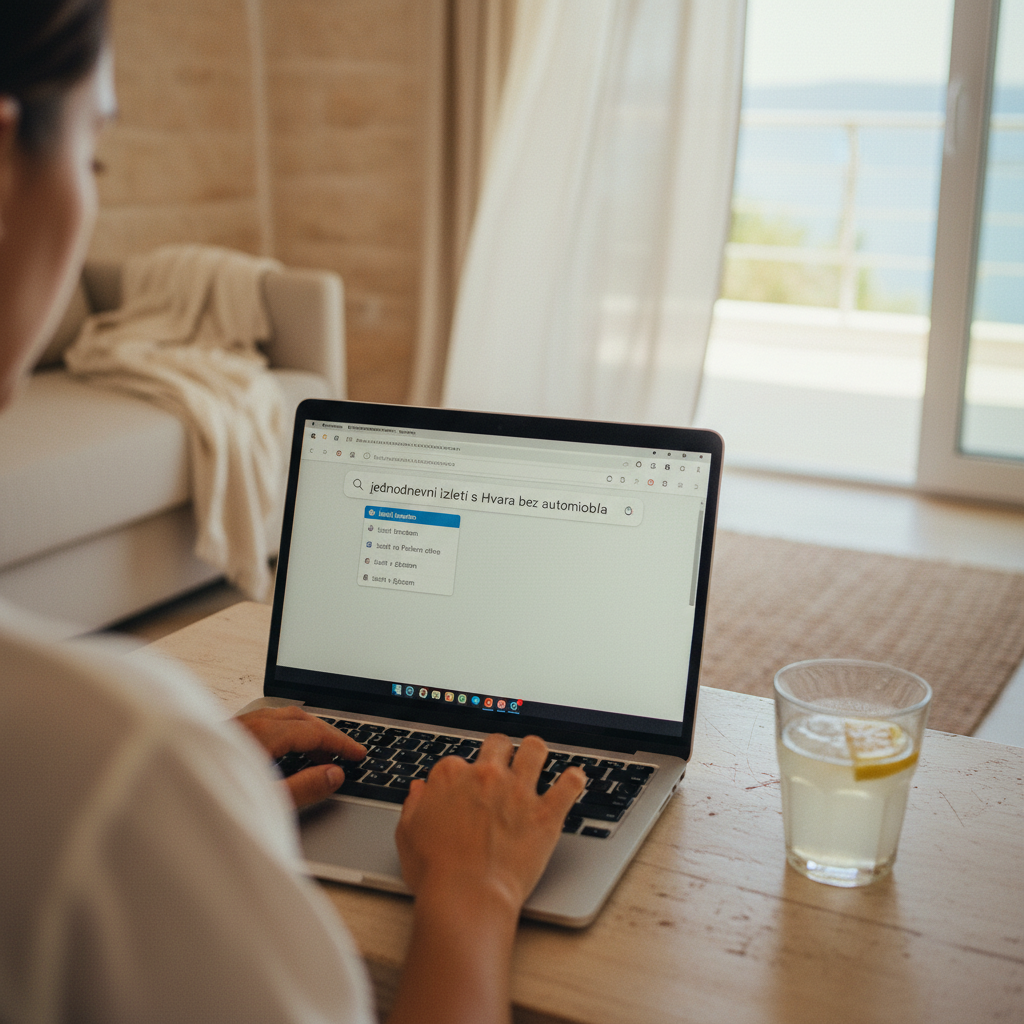
Long-tail keywords account for over 70% of all Google searches. While it's nearly impossible to rank for a term like "apartments Split," achieving a high position for a more specific query is far more realistic. This strategy helps you avoid direct competition with major platforms.
Here are some concrete ideas for guide topics with high potential:
- Activity-based: "Day Trips from Hvar Without a Car" or "Wine Routes Around Motovun."
- Guest-type-based: "Best Beaches Near Split for Families with Young Children" or "Restaurants with Vegan Options in Rovinj."
- Logistics-based: "How to Get from Pula Airport to the City Center" or "Parking in Trogir: A Guide for the 2026 Season."
- Hidden gems: "5 Hidden Coves on Brač Island Accessible Only by Boat."
To research these topics, you can use free tools like Google Autocomplete (the suggestions that appear as you type) or specialized tools like AnswerThePublic. The goal is to find the questions your ideal guests are asking.
— 02The Structure and Content of a Guide That Attracts Guests
A successful local guide must be comprehensive, visually appealing, and practical, with a minimum length of 1,500 words. It should include original photos, an interactive map (Google My Maps), and accurate addresses and opening hours. The key is to provide real value that surpasses generic TripAdvisor lists and saves guests hours of research.
Photo Strategy: Your Own Pictures Are a Must
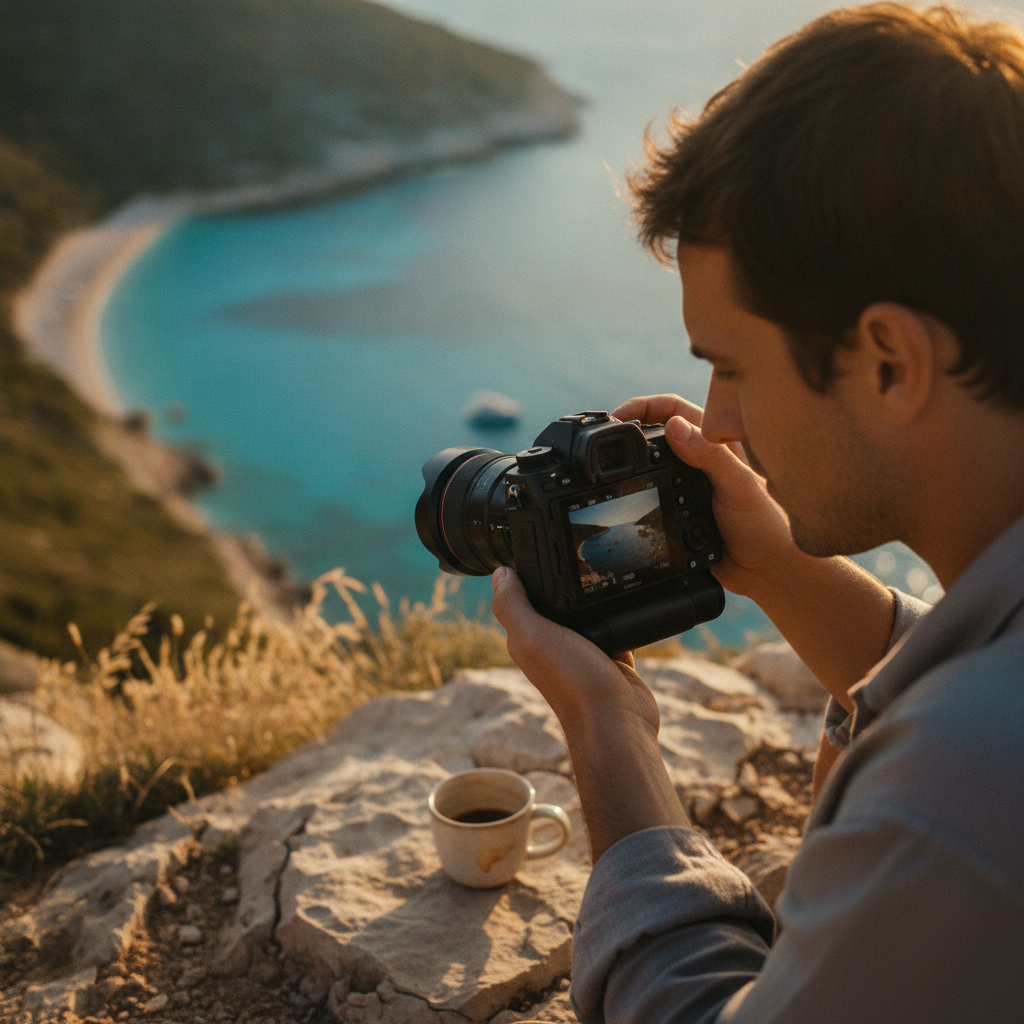
Using generic stock photos from platforms like Unsplash or Pexels undermines authenticity. Your own, realistic photos of locations build trust. If you've already invested €150-€300 in a professional photographer for your property, use that day to also capture key locations in the area.

How to Subtly Feature Your Apartment
Aggressive sales tactics repel readers. Instead, integrate your property in a natural and helpful way.
- As a reference point: "Zlatni Rat beach is just a 20-minute drive from our apartment in Bol, making it an ideal base for exploring."
- As one of the solutions: In an article about "The Best Apartments with a Sea View in Hvar," include your property as one of 5-7 options with an honest description.
- In the conclusion: "We hope this guide has helped with your planning. If you're looking for the perfect accommodation to explore these locations, check the availability of our {Apartment Name}."
BookiApp Data
Based on an analysis of 200+ hosts in the BookiApp database, blog articles that subtly integrate accommodation as a helpful tip have a 12% higher conversion rate than those with aggressive call-to-action banners.
— 03Distribution and Promotion: How to Reach Your First Readers
Distributing your guide is crucial for initial reach, as it takes Google 6-9 months to fully index and rank new content. The most effective channels are Pinterest for visual trip planning, relevant Facebook groups, and specialized subreddits like r/croatiatravel.
Google (SEO)
This is the long-term goal. Basic on-page SEO includes using your target keyword in the title, meta description, URL, and subheadings. Don't forget to add descriptive alt tags to all images.
Pinterest isn't a social network; it's a visual search engine. According to official data, 85% of users use it to plan life events, including travel. Create vertical pins (2:3 aspect ratio) with attractive titles like "10 Hvar Beaches You CAN'T Miss" and link them to your article. Pins have a long lifespan and can drive traffic for months, or even years. [1]
Facebook Groups and Reddit
Sharing a link in groups like "Urlaub in Kroatien" or "Tips for travelling to Croatia" can bring instant traffic. The key is to present the article as a useful resource, not spam. On Reddit, in communities like r/croatiatravel, authenticity is crucial; users value genuine recommendations.
The best promotion is content so useful that people want to share it themselves.
— 04Realistic Expectations: How Much Traffic and How Many Bookings Can One Guide Generate?
One well-optimized local guide won't generate traffic overnight. In the first three months, expect 50-100 visits per month. After 6-9 months, if it reaches the first page of Google for its target keywords, traffic can grow to 200-500+ monthly visits, potentially resulting in 2 to 4 direct bookings per month. [2]
6-9 months
Time to significant organic traffic
200-500
Monthly visits per established article
2-4
Direct bookings per month
€150-€250
Commission savings per direct booking
Here's a concrete example. A host in Trogir published a detailed guide titled "Best Day Trips from Trogir by Boat." The article includes a map, recommendations for local skippers, and prices for the 2026 season.
- Months 1-3: Traffic of 80 visits/month, mostly from Pinterest. No direct bookings.
- Months 4-8: Google ranks the article 4th for the target query. Traffic grows to 350 visits/month. The first 3 direct bookings come through the article.
- After 9 months: The article is a stable source of traffic and has generated 12 direct bookings for the season. Total commission savings exceed €1,800.
The time invested in creating one high-quality guide paid off multiple times over. It's a digital asset that continues to work for you for years, unlike paid ads whose effect stops the moment you stop paying.
Content marketing isn't a quick fix; it's a long-term investment in independence, brand, and profitability. Positioning yourself as a local authority builds trust that no OTA platform can replicate. Instead of writing five short, generic articles, focus on one outstanding guide. Quality will always trump quantity.
Sources
Frequently asked questions
1How often should I publish new guides?
Focus on quality, not quantity. One detailed, 2,000-word guide every 2-3 months will deliver incomparably better results than one short, generic article every week. Google rewards comprehensive and helpful content.
2Do I need my own website, or can I write on Medium?
Your own website is absolutely essential. It's your digital property where you control the brand and, most importantly, can integrate your own booking engine. Platforms like Medium don't allow that level of control and don't build your long-term business asset.
3How much does it cost to write an article like this?
If you write it yourself, the cost is your time—approximately 10-15 hours for quality research, writing, and optimization. Hiring a professional freelance writer in Croatia for an article of this depth and length (1500+ words) costs between €150 and €400.
4Is it better to write in Croatian or English?
It depends entirely on your target audience. If you are targeting guests from Germany, Austria, and the UK, English is a must. For guests from the region, Croatian is sufficient. The ideal strategy is to have a multilingual website and translate the most important guides into key languages.
BookiApp Tim
Guest Experience Platform for Vacation Rentals
The BookiApp Team combines the experience of active hosts with analytical market insights. We write practical guides for small-scale owners of apartments, villas, and rooms—no fluff, just concrete numbers and verified sources.
Related articles

Vacation Rental Insurance: What Airbnb and Booking Don't Cover (2026)
Think Airbnb AirCover or Booking.com's insurance has you covered? Discover what these platforms miss, from guest liability to property damage, and what policy you actually need.
Read more
How to Get Guests to Book Direct and Save 18% on Commissions
A guide for vacation rental hosts in Croatia: Learn how to legally encourage guests to book direct, avoid Booking.com's 15-18% commission, and build a loyal guest base.
Read more