
Guest Asking for a Discount? 5 Ways to Respond and Save the Booking
BookiApp Team
Guest experience app for short-term rentals
Key takeaway
A guest is asking for a discount? Never just say 'no.' Instead, offer added value like a late checkout or free parking. For a family, offer a baby cot; for a couple, a bottle of wine. Only accept a 10-15% discount in the shoulder season (April, October) to fill a 3+ night gap. A clear price list on Booking.com and Airbnb prevents 80% of these inquiries.
Table of contents
Consider a common scenario for new vacation rental hosts: a German family requests a 10-night stay in a Kaštela apartment during peak season, then sends a follow-up message: "We love it, but our budget is a bit tight. Could you do a 20% discount?" A curt reply like, "Sorry, the prices are fixed," often results in losing the inquiry altogether. The apartment might then sit empty for 4 of those 10 nights.
This misstep can easily cost a host over 700 EUR. It highlights a critical lesson in vacation rental management: price negotiation is a strategic process, not a personal attack. Based on analysis of hundreds of successful Croatian hosts, mastering this process leads to converting over 90% of such inquiries into confirmed bookings, often without reducing the price by a single cent. Here’s how.
— 01Why "No, the Price is Final" Kills Your Business
Simply telling a guest "no" when they ask for a discount is the fastest way to lose a booking and appear unprofessional. That kind of response comes off as cold and shuts down any further communication. The guest feels rejected and immediately moves on, even if they preferred your property. The key is to leave the door open to negotiate on value, not just on price.
A guest contacting a host through Booking.com or Airbnb knows the platform takes a commission, which in Croatia is between 15% and 18%. They assume there is some room for negotiation. When a host slams the door with "the price is final," the guest hears, "I don't care about your business." On the other hand, showing flexibility—even without lowering the price—demonstrates a commitment to hospitality. Fixed costs for a typical Croatian apartment are around 450 EUR a month (electricity, water, utilities, internet) plus the paušalni porez (a flat-rate tourist tax) of about 45 EUR per bed, per year. Every empty night is a pure loss, and poor communication is the most common cause of empty nights.
— 02Response Scripts: 3 Guest Types, 3 Smart Replies
The best response to a discount request depends on who's asking. Families have one set of priorities, couples another, and business travelers a third. The goal is to personalize the offer and provide added value that costs the host far less than the discount the guest is asking for. Here are field-tested scripts for common guest types.
Type 1: The Family with Kids They aren't just looking to save money; their travel costs are already high. They prioritize peace of mind and convenience.
Their inquiry: "We're coming with two small children (2 and 5 years old), can we get a discount for a 7-night stay?"
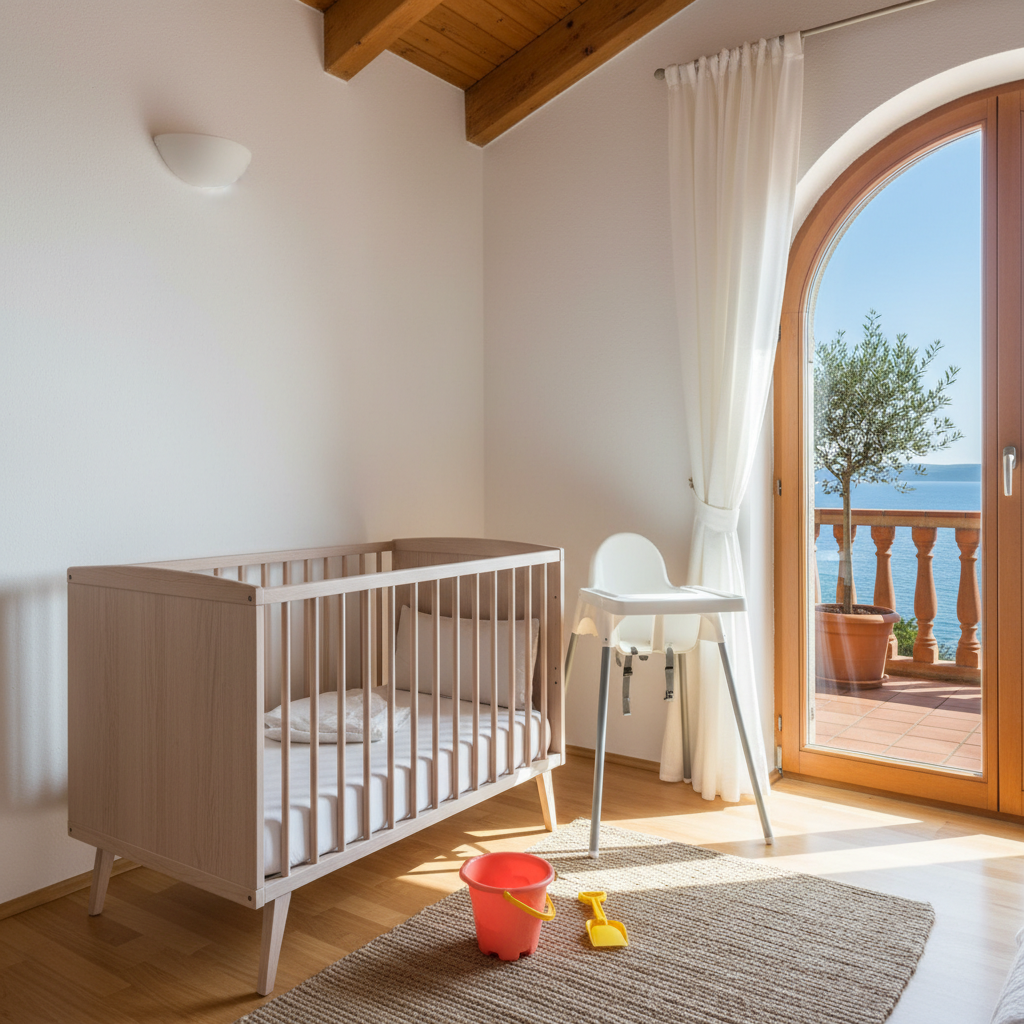
Your reply: > "Hi {Guest Name}, thank you for your interest in our apartment! The price is already optimized for the season, so unfortunately, we can't lower it. However, since you're traveling with children, we'd love to make your trip easier. We'd be happy to provide a baby cot and a high chair for free (a 15 EUR/day value), and you'll find beach toys and kid-friendly tableware waiting for you in the apartment. We hope this helps with your decision!"
Why this works: No discount was given, but the host solved a major problem for the guests (lugging extra gear) and showed an understanding of their needs. The provided value is often greater than the 10% discount they were hoping for, at a minimal cost to the host.
Type 2: The Young Couple They're looking for an experience and want to feel special. A discount for them is often just confirmation that they made a smart choice.
Their inquiry: "Hey, my girlfriend and I are coming for our anniversary, the apartment looks amazing! Any chance of a discount?"
Your reply: > "Hi {Guest Name}, thank you and congratulations on your anniversary! The price is final, but given the special occasion, we'd like to offer you a little gift. A chilled bottle of excellent local wine will be waiting for you in the fridge upon arrival, and you can check out at 12:00 PM instead of 10:00 AM on your departure day, at no extra charge. We hope you have a wonderful stay!"
Why this works: This reply creates a sense of exclusivity. A bottle of local wine costs the host 7-10 EUR, and a late checkout (if no guests are arriving the same day) costs nothing. The perceived value for the guest is much higher.
Type 3: The Business Traveler / Digital Nomad Efficiency, reliability, and convenience are their top priorities. They often travel in the off-season.
Their inquiry: "I'm coming for business for 5 days and need stable internet and a quiet space. Is the price negotiable? I will need an R1 invoice."
Your reply: > "Hello, thank you for your inquiry. The price is final, but we do offer a few perks for our business guests. We've equipped the apartment with premium fiber optic internet (200 Mbps) for stable video calls. We can also arrange a complimentary private transfer from Split Airport to the apartment for you (a 40 EUR value). And of course, issuing an R1 business invoice is standard procedure."
Why this works: The host is solving the guest's key problems—transportation and work. The transfer might cost 30-35 EUR, which is likely less than the requested discount, but it offers incomparably greater value and professionalism.
— 03The Counter-Offer: How to Provide Value Instead of a Discount
A counter-offer is a strategy where, instead of cutting the price, the host offers an extra service that provides value to the guest at a minimal cost. The guest's perceived value of this perk often far exceeds the actual expense. Parking in the center of Split or Dubrovnik can cost up to 40 EUR per day in season. For a host with a free parking spot, this is a huge saving for the guest and a powerful argument against a discount.
Here is a table of effective counter-offer ideas, with an estimate of the host's cost versus the guest's perceived value:
| Service/Perk | Host's Actual Cost (EUR) | Guest's Perceived Value (EUR) |
|---|---|---|
| Late checkout (until 1:00 PM) | 0 EUR | 20-30 EUR (extra time) |
| Free parking | 0 EUR (if available) | 20-40 EUR / day |
| Bottle of local wine/beer | 7-10 EUR | 25 EUR (a thoughtful gift) |
| Airport transfer (one way) | 25-35 EUR | 40-50 EUR (convenience & safety) |
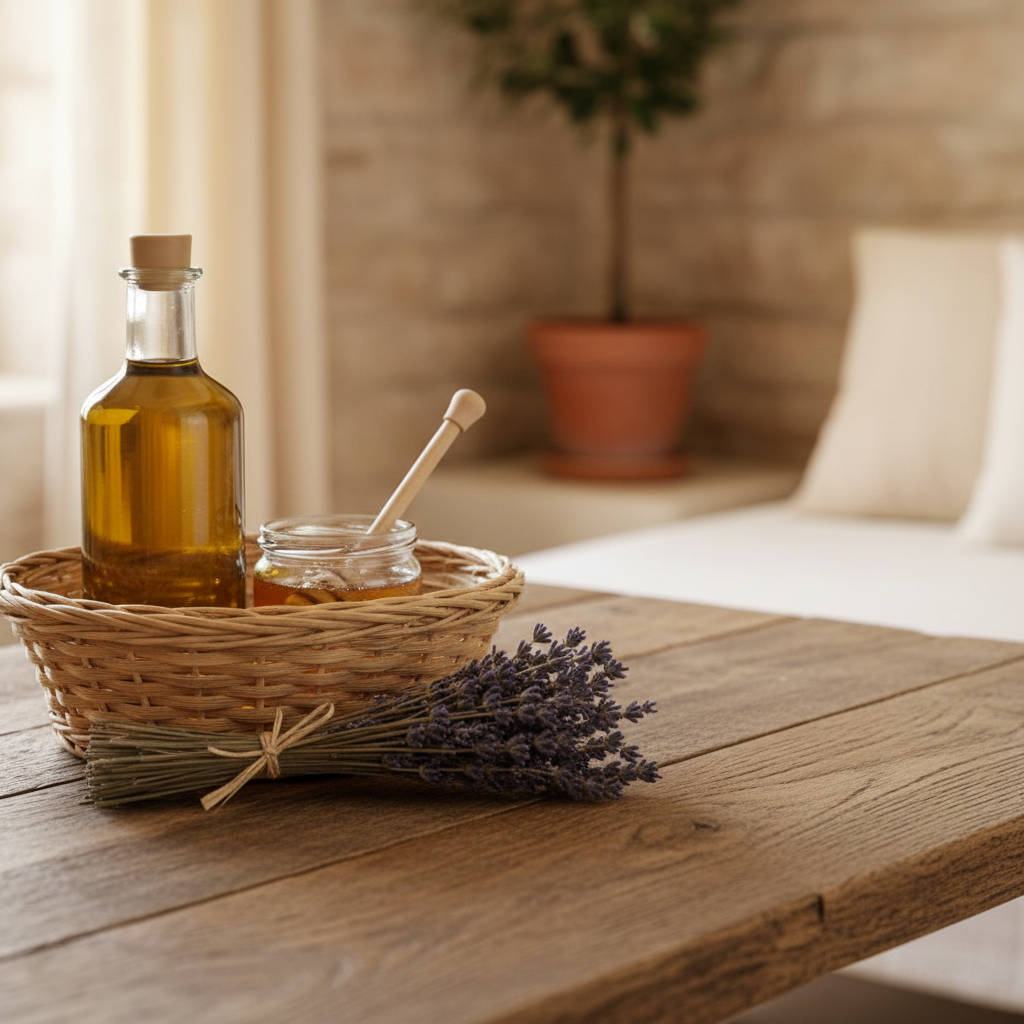
| Welcome basket (local goods) | 15 EUR | 40 EUR (an experience) |
| Early check-in (from 12:00 PM) | 0 EUR (if possible) | 20 EUR (less waiting) |
For example, a family from Austria might ask for a 15% discount on a 10-day stay in July, which would represent a revenue loss of about 270 EUR. Instead, the host could offer them free parking for their entire stay (a value of about 200 EUR) and a welcome basket. They often accept immediately. Instead of losing 270 EUR, the host's only cost is the 15 EUR for the basket. That's smart business.
— 04When It's Smart to Say 'Yes' to a Discount (and How Much)
Agreeing to a discount only makes sense during the shoulder seasons (April, May, October) to fill calendar gaps of 3-4 nights or more. In these cases, a realistic 10-15% discount is justified because reduced income is always better than zero. Hosts should never give discounts in peak season (July, August).
The calculation for October is simple. If an apartment is 85 EUR/night and has a 4-night gap between two bookings, a guest might inquire for those 4 nights for 290 EUR instead of 340 EUR (a discount of about 15%). Accepting is the logical choice. The 290 EUR covers fixed costs and still nets a profit of around 180 EUR. The alternative is 0 EUR. In August, when the price is 190 EUR/night and occupancy is 98%, hosts should politely decline every discount request using one of the value-add scripts. Guests almost always book at the full price because they know they have few other options. For dynamic pricing, tools like PriceLabs, which cost around 19 EUR per month per unit, can handle 90% of the optimization work, a topic also covered by the portal Cimerfraj.
— 05How to Prevent Haggling from the Start: The Psychology of Pricing
The best way to avoid price negotiations is to make a listing look fair, complete, and professional from the get-go. Clearly state everything that's included in the price (tourist tax, cleaning, WiFi, parking), use top-notch photos, and have at least 30-40 positive reviews. Prices that end in '9' or '5' (e.g., 149 EUR instead of 150 EUR) psychologically appear to be already discounted and final.
Including a clear statement in the property description on all channels (Booking, Airbnb, direct website) is highly effective: "The price includes: final cleaning, tourist tax (boravišna pristojba), unlimited high-speed WiFi, air conditioning, parking, and registration in the eVisitor system. There are no hidden costs."
This simple sentence can eliminate 80% of discount inquiries because guests see that everything is included and that the host is transparent. Professionalism builds trust, and trust reduces the need to haggle. A guest who sees a 9.8 rating based on 150 reviews knows that the offering is worth the asking price. Investing in quality is the best prevention for haggling.
Ultimately, this strategy is about maintaining the value of the property and the service provided. It reflects respect for the business and the investment made to ensure a quality guest experience. A guest whose initial contact focuses solely on a discount, without any other questions or comments, can be a red flag for hosts, sometimes indicating a higher likelihood of post-stay issues. The goal is to attract guests who appreciate value. The host's job is to communicate that value clearly, not to immediately diminish it with a discount.
Frequently asked questions
1What if a guest threatens a bad review if I don't give them a discount?
This is blackmail and a direct violation of the rules on platforms like Booking.com and Airbnb. Hosts should immediately save screenshots of the messages as proof and report the guest to customer support. Never give in to such threats. A host's rating is important, but business integrity is more important.
2What is the maximum discount I should give in the shoulder season?
Hosts should stick to the 10-15% rule. Anything more than that significantly cuts into the profit margin and can attract guests who don't respect the property long-term. For stays longer than 14 days, up to 20% could be considered, but only if it fills a large gap in the calendar.
3Should I offer a discount for 'last-minute' bookings?
Not necessarily. Dynamic pricing tools (like PriceLabs) often lower the price automatically as the date approaches. If pricing is managed manually, a 10% discount for a booking made within 48 hours can be a smart move to fill a day that would otherwise go unsold.
4Should I offer a discount for cash payments?
While it's tempting to avoid the platform commission (15-18%), this is a legal gray area. According to the Croatian [Law on Hospitality and Catering Services](https://www.zakon.hr/z/151/zakon-o-ugostiteljskoj-djelatnosti), every service must be officially recorded and fiscalized. By offering a discount for cash 'under the table,' hosts risk high fines from the Croatian Tax Administration (*Porezna uprava*).
BookiApp Team
Guest experience app for short-term rentals
The BookiApp Team combines hands-on experience from active hosts with market analytics. We publish practical guides for small vacation rental hosts — no fluff, just concrete numbers and verified sources.
Related articles

Vacation Rental Insurance: What Airbnb and Booking Don't Cover (2026)
Think Airbnb AirCover or Booking.com's insurance has you covered? Discover what these platforms miss, from guest liability to property damage, and what policy you actually need.
Read more
How to Get Guests to Book Direct and Save 18% on Commissions
A guide for vacation rental hosts in Croatia: Learn how to legally encourage guests to book direct, avoid Booking.com's 15-18% commission, and build a loyal guest base.
Read more