

Sustainability in Your Rental: 5 Moves Guests Value (and How to Avoid Greenwashing)
BookiApp Tim
Vacation Rental Guest App
Key takeaway
Implementing sustainability in vacation rentals is no longer a trend but a business strategy. According to the Booking.com Sustainable Travel Report, over 75% of travelers prefer sustainable stays but are wary of 'greenwashing.' The focus should be on measurable actions like switching to LED lighting, using refill dispensers instead of single-use plastics, and providing recycling bins. These investments, often under €100, yield returns through operational savings and the potential for slightly higher nightly rates.
Key points
- 1Guest Demand is Real: Over 75% of travelers prefer sustainable stays, focusing on tangible actions like waste reduction and energy efficiency, not just empty claims.
- 2Focus on High-ROI Actions: Initial investments under €100 for LED lights, refill dispensers, and recycling bins can pay for themselves in one season through operational savings.
- 3Booking.com Requires Certification: To get the official sustainability badge on Booking.com, you now need a third-party certificate; simply listing practices is no longer enough for premium visibility.
- 4Avoid 'Greenwashing': Guests can spot inauthentic claims. Be transparent by highlighting specific actions (e.g., 'we use refillable soap dispensers') rather than vague statements ('we are eco-friendly').
- 5Sustainability Justifies Higher Rates: A proven commitment to sustainability, backed by guest reviews, can justify a small price increase, boosting revenue and attracting higher-quality guests.
Table of contents
Sustainability in tourism has evolved from a marketing buzzword into a key factor for a growing number of travelers when choosing accommodations. In the Croatian context, where private rentals compete on a global market, implementing sustainable practices is no longer a matter of image but of profitability and long-term competitiveness.
The focus is shifting from abstract promises to concrete, measurable actions that guests can see and experience. The modern traveler, especially from Western and Northern Europe, is educated and can spot the difference between genuine environmental responsibility and superficial 'greenwashing.'
This guide analyzes what guests truly value, which investments offer the quickest returns, and how to leverage sustainability tools to attract higher-quality guests for the 2026 season and beyond.
— 01What Travelers Actually Check: Data Over Assumptions
Travelers actively seek and filter accommodations based on sustainable practices, and data shows their priorities are very specific. The 2024 Booking.com Sustainable Travel Report reveals that 75% of global travelers want to travel more sustainably in the coming year. They aren't just looking for an 'eco-friendly' label; they check for specific features that prove a host's commitment.
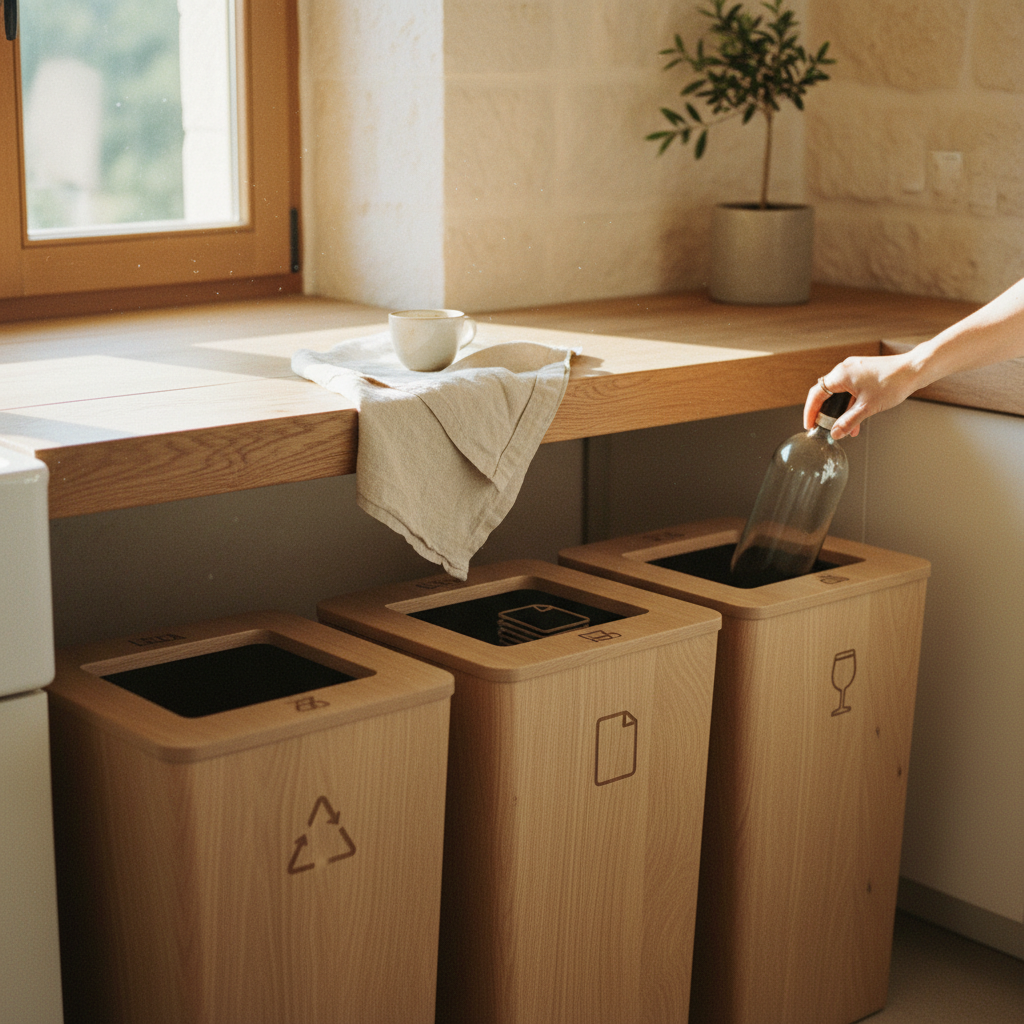
Visible evidence of waste reduction and energy efficiency has the greatest impact on booking decisions. Guests notice and appreciate the following initiatives:
- Elimination of single-use plastics: Instead of small bottles of shampoo and shower gel, guests prefer wall-mounted, refillable dispensers.
- Recycling options: Clearly labeled bins for separating waste (plastic, glass, paper) inside the apartment are a strong signal of responsibility.
- Energy efficiency: While they can't check insulation, guests notice the use of LED lighting and the availability of energy-efficient appliances (Class A or higher).
- Water conservation: Low-flow showerheads and faucets (with aerators) are small details that experienced travelers recognize.
83%
of travelers confirm that sustainable travel is important to them
75%
of travelers want to travel more sustainably in the next 12 months
45%
of travelers find accommodations with a sustainability certification appealing
Abstract claims without proof are losing credibility. Analysis of BookiApp user data shows that reviews increasingly mention specific examples: "We loved the recycling bins" or "Finally, a rental without a pile of unnecessary plastic."
— 02Concrete Investments With a Fast ROI
The fastest return on investment (ROI) in sustainability comes from three key moves: switching to 100% LED lighting, installing refill dispensers for soap and shampoo, and setting up visible recycling bins. These are low-cost investments that directly reduce operational expenses and attract eco-conscious guests, creating an opportunity for a price adjustment.
Transitioning to sustainable practices doesn't have to mean installing expensive solar panels. Initial investments can be extremely low, with a payback period within a single season.
1. LED Lighting Replacing all traditional or halogen bulbs with LED technology reduces electricity consumption for lighting by up to 85%. An LED bulb uses about 9W to produce the same amount of light as a 60W traditional bulb and lasts up to 25 times longer.
2. Refill Dispensers Purchasing mini toiletries (15-30 ml) is both expensive and environmentally unfriendly. A single 30 ml bottle costs about €0.40 to procure. For 100 check-ins, that's a cost of at least €40 for shampoo alone. A quality wall-mounted dispenser costs around €15-20, and a 5-liter canister of liquid soap or shampoo (enough for an entire season) costs between €20-30.
3. Recycling Bins A set of three smaller bins (plastic, paper, glass) costs around €25-30. While it doesn't bring direct financial savings, this investment has a huge impact on guest perception and is often mentioned in positive reviews.
| Investment | Initial Cost (50m² apartment) | Annual Savings | Payback Period (ROI) |
|---|---|---|---|
| LED Lighting (10 bulbs) | ~€40 | ~€50-70 (on electricity) | < 1 year |
| Refill Dispensers (2 units) | ~€30 | ~€60-100 (on toiletries) | < 1 season |
| Recycling Bins (set) | ~€25 | N/A (brand impact) | Immediate (perception) |
| Total | ~€95 | ~€110-170 + brand value | < 1 season |
— 03Highlighting Sustainability on Booking.com: Free Marketing
Booking.com has changed its sustainability program. Instead of the previous 'Travel Sustainable' program, the platform now exclusively highlights properties with an official third-party sustainability certification. While individual sustainable practices can still be listed in the extranet, only certified properties receive a special badge and visibility in search filters.

The previous program was structured in levels, but that system was discontinued in March 2024. Under the new rules, obtaining a prominent sustainability badge on Booking.com requires a certificate from one of the recognized independent organizations.
Although the actions mentioned (eliminating plastic, saving water, recycling, LED lighting) are still recommended practices that can be displayed on your property page, they are no longer sufficient on their own to earn the prominent sustainability badge on Booking.com. To acquire that badge, it is now necessary to obtain a certificate from an approved third party.
BookiApp Data
Data from previous years, when the old badge system was in place, showed that properties with a sustainability highlight had better visibility. Although the program has changed, it is expected that properties with the new, certified badge will also achieve greater visibility and guest interest.
All options and detailed instructions for highlighting your sustainable practices are available within your Booking.com extranet, typically under the 'Property' -> 'Sustainability' tab or via the Booking.com Partner Hub.
— 04The Difference Between Authenticity and 'Greenwashing'
'Greenwashing' is a marketing tactic where a property is falsely presented as eco-friendly without implementing real sustainable measures. This includes using terms like 'eco' or 'green' in the name without proof. Authentic sustainability, however, involves transparent, measurable actions like reducing waste and energy consumption, which savvy guests easily recognize.
The most common examples of 'greenwashing' in vacation rentals are:
- The towel card: Placing a sign that says, "Think of the environment, reuse your towel," while simultaneously providing mini plastic bottles of shampoo, gel, and lotion in the bathroom.
- 'Eco' in the name: Adding the prefix 'Eco' or 'Green' to the apartment's name without any concrete evidence or certifications in the property description.
- Generic statements: Using phrases like "we care for the environment" in the description without listing a single specific action (e.g., "we use LED lighting," "we provide recycling bins").
Transparency is sustainability's most powerful tool. It's better to list three concrete things you do than to make ten abstract promises you can't prove.
Authenticity, on the other hand, lies in the details. Instead of a generic welcome pack with imported cookies, offer a small jar of local honey, a bottle of olive oil from a local OPG (family farm), or a handmade bar of soap. This not only supports the local community but also provides guests with a unique experience they will remember and mention in reviews. Such an approach confirms your commitment and builds trust, which translates into long-term loyalty and higher rates.
— 05Case Study: An Apartment in Rovinj (2026 Season)
The owner of a 45m² apartment in Rovinj invested €150 in sustainable practices, including LED lighting, refill dispensers, recycling bins, and a local welcome pack. By highlighting these features on Booking.com and earning positive reviews mentioning eco-consciousness, the owner successfully raised the nightly rate by €5, achieving a full return on investment within 30 days of the season.
Investment and Return Analysis:
- 1 Initial Investment (Total €155):
- 2 Operational Savings per Season (100 nights):
- 3 Additional Revenue:
Calculation Conclusion: The total financial benefit in the first season was €640 (€140 in savings + €500 in revenue) on an investment of €155. The return on investment was achieved after just 31 booked nights at the new price.
Sustainability is not an expense; it's an investment with one of the fastest returns in modern tourism. Today's travelers are willing to pay more for accommodation that aligns with their values. By implementing concrete, visible, and honest practices, hosts in Croatia can not only reduce costs but also build a strong brand that attracts better guests and ensures long-term success.
Sources
Frequently asked questions
1How much does it really cost to make an apartment 'sustainable'?
A basic sustainability package, which includes switching to LED lighting, installing refill dispensers, and setting up recycling bins, costs between €90 and €120 for an average 50m² apartment. This investment typically pays for itself within one season through savings.
2Will guests be upset if there are no small shampoo bottles?
On the contrary, most modern travelers have a negative perception of single-use plastics. Quality liquid soap and shampoo in a clean, elegant wall-mounted dispenser convey a sense of hotel-standard quality and environmental awareness, often resulting in more positive reviews.
3What local products are best for a welcome package?
The best products are those that don't require refrigeration and have a long shelf life. A small jar of local honey, a bottle of olive oil, a sachet of dried lavender, a bar of handmade soap, or a package of traditional cookies (like paprenjaci) are all excellent choices.
4Can I get the Booking.com sustainability badge without solar panels?
Under the new rules, obtaining the official sustainability badge on Booking.com requires a third-party certificate. Many certifications do not require solar panels but instead focus on a range of other practices like water conservation, recycling, using LED lighting, and eliminating single-use plastics. You can still list these practices on your profile even without a certificate.
BookiApp Tim
Vacation Rental Guest App
The BookiApp Team combines hands-on hosting experience with market data insights. We write practical guides for small-scale hosts of apartments, villas, and rooms—no fluff, just concrete numbers and verified sources.
Related articles

Vacation Rental Insurance: What Airbnb and Booking Don't Cover (2026)
Think Airbnb AirCover or Booking.com's insurance has you covered? Discover what these platforms miss, from guest liability to property damage, and what policy you actually need.
Read more
How to Get Guests to Book Direct and Save 18% on Commissions
A guide for vacation rental hosts in Croatia: Learn how to legally encourage guests to book direct, avoid Booking.com's 15-18% commission, and build a loyal guest base.
Read more