

Preparing your apartment for the 2026 season: A month-by-month breakdown
BookiApp Team
Guest experience app for short-term rentals
Key takeaway
The 2026 season brings new obligations: accommodation registration numbers become mandatory by May, guests book an average of 91 days in advance, and electricity costs around 0.15 EUR/kWh. Monthly prep: February - photos and pricing, March - technical inspection and repairs, April - linens and equipment, May - test run and registration number, June - fine-tuning before first guests.
Table of contents
For many vacation rental hosts, the pre-season period follows a familiar pattern. January passes in post-season recovery, February in planning, and then March arrives, bringing a sense of urgency.
Analysis of hundreds of hosts on the Adriatic coast reveals a key insight: a successful season isn't prepared in June. It's prepared now.
This isn't a list of generic tips. It's a concrete, month-by-month schedule for hosts, complete with timelines, cost estimates, and critical details that are often overlooked.
— 01January: Thinking, not action
January is the month for rest and strategic reflection. Experience shows that rushing into action in the first month after the holidays can lead to poor decisions.
What to do in January:
- Review last season's performance. Analyzing data from Booking.com and Airbnb can take as little as 30 minutes and provide a strategic direction for the entire year.
- Identify the top three repetitive manual tasks from the previous season. If sending the WiFi password was a frequent task, it's a prime candidate for automation.
- Consider major investments like new air conditioning, furniture, or renovations, but defer purchasing until February.
What NOT to do in January:
- Don't open the availability calendar yet; the booking market is still quiet.
- Don't adjust prices without sufficient market data.
- Don't purchase new equipment; there are still four months to do so.
— 02February: Photos, pricing, and your online profile
According to data from Adriatic.hr, guests book an average of 91 days in advance for summer holidays. This means July bookings often happen in April, and June bookings are being made now.
What to actually do:
- Open the availability calendar for all of 2026 on every platform.
- Update property photos. A professional photographer isn't always necessary, but natural light and a clean space are non-negotiable. The best time to shoot is on a sunny morning between 9 and 11 AM.
- Review property descriptions on Booking.com and Airbnb. Ensure they are accurate and highlight any new amenities like an AC unit, mattress, or terrace furniture.
- Set prices for each month individually. This is a key component of a dynamic pricing strategy.
A common mistake for new hosts is setting a flat rate for the entire summer. This typically leads to lost revenue in July (price too low) and low occupancy in June (price too high).

— 03March: Technical inspection and repairs
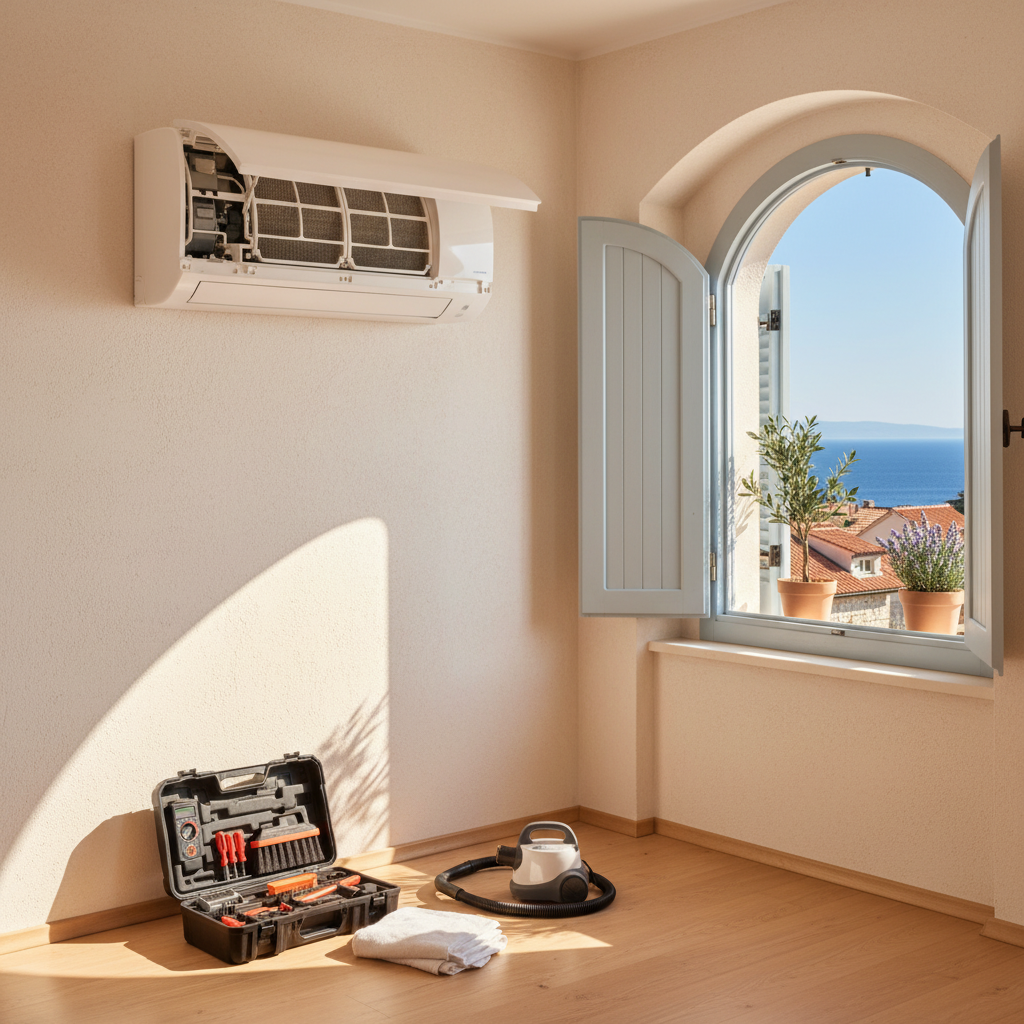
March is the ideal time for a thorough technical inspection, approaching the property from a guest's perspective.
Technical inspection checklist:
- AC unit: Turn it on and let it run for 30 minutes. Confirm it cools effectively and is clean. An AC service costs 30-50 EUR and prevents one-star reviews caused by a broken unit in August.
- Water heater: Fill the tub or run the shower for 15 minutes to ensure there is enough hot water for at least two consecutive users.
- All faucets: Run the water to check for drips and ensure proper drainage.
- Electricity: Test every outlet by charging a phone. Turn on all major appliances like the fridge, oven, and microwave.
- Windows and doors: Check that they all close properly and that mosquito screens are intact.
- WiFi: Measure the signal speed from every room. A speed below 10 Mbps is a potential problem for guests.
Costs to plan for: The average electricity price in Croatia is around 0.15 EUR/kWh. An AC unit running 8 hours daily costs about 50-80 EUR per month in season. This operational cost must be factored into the pricing strategy.
— 04April: Linens, equipment, and the little things guests notice
Guest experience is often defined by the details, not expensive furniture. Dirty grout, thin bed sheets, and a blunt knife are common points of negative feedback.
What to replace every year: - Towels that have turned grey or lost their softness. - Pillows that have gone flat (vacuum-packed replacements cost 15-20 EUR each). - Bed linen that shows signs of wear.
What to add if you don't have it: - A USB charger next to the bed is a low-cost (5 EUR) high-impact amenity. - An extension cord with USB ports. - A sufficient number of hangers in the closet (minimum 10 per person). - A bottle opener and corkscrew – consistently one of the most requested items.
Bathroom - details that make the difference: - A phone holder in the shower. - A modern, functional hair dryer. - A mirror that doesn't fog up, or a dedicated cloth for wiping it.

— 05May: Registration number and test run
A new requirement for 2026. According to EU Regulation 2024/1028, from May 2026 every accommodation unit must have a registration number. Without it, platforms like Booking.com and Airbnb will not be able to display the listing.
What this means in practice: - A registration number must be requested for each separate apartment or room. - The registration process requires the exact address, property type, purpose, and maximum number of beds. - The number must be visibly displayed on all online listings.
Test run:
Two weeks before the first arrival, conduct a "dress rehearsal." Ask a friend or family member to stay overnight and provide honest feedback on their experience: - Could they find everything they needed? - Was the WiFi reliable? - Were the appliance controls intuitive? - What was missing?
This feedback can uncover usability issues that are not obvious to the host, such as complex oven controls, allowing for the creation of simple instruction guides.

— 06June: Fine-tuning and first guests
With thorough preparation from February to May, June becomes a month for fine-tuning.
- Check all reservations for June and July to ensure contact details for every guest are on file.
- Send a welcome message 3-5 days before arrival with essential information (directions, WiFi, parking).
- Prepare a simple "welcome package." This doesn't need to be extravagant; a bottle of water, local wine or olive oil, and a short neighborhood guide are sufficient.
Digital communication:
One way to keep all this info in one place for guests is using a digital guidebook - whether through a landing page, a shared document, or a dedicated guest app. The goal is the same: guests don't have to ask anything; they find everything in one place from booking to checkout. We solve this through BookiApp, but the approach matters more than the tool.
— 07July-August: Mid-season maintenance
The season is in full swing. Proactive hosts do more than just manage guest turnovers; they perform ongoing maintenance.
A recommended weekly routine:
- Monday: Review reservations for the next two weeks. Identify any special requests or potential issues.
- Wednesday: Conduct a quick inspection between guests, focusing on high-use items like AC filters (which can clog in 2-3 weeks), shower drains (limescale), and kitchen supplies.
- Friday: Review and respond to all new reviews promptly to improve platform scores.
What goes wrong in season and how to react:
- AC stops working: Have an HVAC technician's contact information readily available. In July, repair wait times can be 3-7 days, which will likely require a refund or upgrade for the guest.
- Water heater breaks: Have a repair person on standby. A lack of hot water for over 24 hours typically warrants guest compensation.
- Neighbor complains about noise: Address the issue immediately. Speak with the guests directly and professionally.
— 08September-October: Post-season and analysis
The post-season is a valuable period that many hosts overlook. The guest demographic often shifts to older, wealthier, and less demanding travelers.
What to do in September/October:
- Drop prices by 20-30% compared to the peak season, but avoid excessive discounts that could suggest a problem with the property.
- Target guests aged 50+ on booking platforms, as they are more prevalent in the post-season.
- Use this time for minor repairs that were not possible during peak season, such as painting and small fixes.
November-December: Closing the season
- Conduct a detailed checkout of all apartments to create a maintenance list for the next year.
- Finalize bookkeeping. The flat-rate tax is calculated by March 31, but financial records should be maintained throughout the year.
- Negotiate with service providers (e.g., AC maintenance, cleaning services) for the upcoming year. Booking in December can often secure better pricing.
— 09Preparation costs - a realistic overview
A realistic budget is crucial for pre-season preparation:
| Item | Estimated cost |
|---|---|
| AC service (per unit) | 30-50 EUR |
| New bed linen (set) | 40-80 EUR |
| New pillows (2 pcs) | 30-40 EUR |
| New towels (set) | 20-30 EUR |
| Small equipment (USB chargers, extensions, hangers) | 30-50 EUR |
| Welcome package (per guest) | 5-10 EUR |
| Professional cleaning | 50-100 EUR |
| Total per apartment | 200-360 EUR |
This is an investment in guest satisfaction. A single bad review can result in lost bookings far exceeding this amount.
— 10Instead of a conclusion
The key takeaway is that guest satisfaction hinges on preparation. Guests don't expect perfection, but they do expect a clean, functional space and for the host to be responsive.
Preparation isn't glamorous. But the difference between a host with a 4.8 rating and one with a 3.9 on Booking.com often isn't location or price. It's the effort invested before the guest even arrives.
Frequently asked questions
1How far in advance do guests book apartments for the summer season?
According to 2025 data, guests book an average of 91 days in advance for summer holidays. This means calendars and pricing should be finalized at the beginning of the year.
2What is an accommodation registration number and is it necessary?
From May 2026, every accommodation unit in Croatia must have a registration number under EU Regulation 2024/1028. Without it, platforms like Booking.com and Airbnb will not be able to display your listing.
3How much does it cost to prepare an apartment for the season?
A realistic budget for preparing one apartment is between 200-360 EUR. This typically covers AC service, new linens, towels, small equipment, and professional cleaning.
4How much electricity does an AC unit use during the season?
With an average electricity price of 0.15 EUR/kWh in Croatia, an AC unit running 8 hours daily costs approximately 50-80 EUR per month. This cost should be factored into the nightly rate.
BookiApp Team
Guest experience app for short-term rentals
The BookiApp Team combines hands-on experience from active hosts with market analytics. We publish practical guides for small vacation rental hosts — no fluff, just concrete numbers and verified sources.
Related articles

Vacation Rental Insurance: What Airbnb and Booking Don't Cover (2026)
Think Airbnb AirCover or Booking.com's insurance has you covered? Discover what these platforms miss, from guest liability to property damage, and what policy you actually need.
Read more
How to Get Guests to Book Direct and Save 18% on Commissions
A guide for vacation rental hosts in Croatia: Learn how to legally encourage guests to book direct, avoid Booking.com's 15-18% commission, and build a loyal guest base.
Read more