

Tourism Inspection in Croatia 2026: A Guide for Rental Owners
BookiApp Tim
Vacation Rental Guest App
Key takeaway
The tourism inspection most often checks the Categorization Permit (Rješenje), timely guest registration in eVisitor, and a properly displayed price list. Fines for violations like failing to register guests are prescribed by the Tourist Tax Act. The key to a successful inspection is organized documentation and professional communication. Prepare all paperwork in advance and ensure the property's actual state matches the permit.
Key points
- 1eVisitor is crucial: Failure to register or late registration/checkout of tourists in the eVisitor system is a violation under the Tourist Tax Act, for which fines are prescribed.
- 2Display your documents: The price list, complaint notice, and evacuation plan must be visible in each accommodation unit. You must have the Categorization Permit ready for inspection.
- 3The actual state matters: The number of beds in the apartment must exactly match the number specified in the Categorization Permit. Any extra bed is a serious violation.
- 4Appeal deadline: You have the right to appeal a misdemeanor order within 8 days. By paying 2/3 of the fine within that period, the fine is considered paid in full.
- 5Professional communication: Cooperation with the inspector is key. Avoid arguments, excuses, and informal proposals.
Table of contents
A visit from the tourism inspection is a stressful event for many vacation rental owners. However, with good preparation and orderly business practices, an inspection is a routine check that can go smoothly. In Croatia, this practice is common, especially during the peak season months in destinations like Split, Dubrovnik, and Rovinj.
The purpose of an inspection is not to punish but to ensure that all stakeholders in tourism operate in accordance with regulations, thereby protecting the quality of Croatian tourism and the rights of consumers, i.e., guests. Understanding what inspectors are looking for is the foundation for a worry-free business.
This guide explains in detail the key points of an inspection, the necessary documentation, the amount of fines according to the 2026 regulations, and the steps you can take if disagreements arise. The goal is to provide concrete information that helps rental owners stay one step ahead.
— 01Top 10 Things a Tourism Inspector Checks
A tourism inspector primarily verifies compliance with the official Categorization Permit (Rješenje) and current laws. The focus is on official documentation, proper property signage, guest registration, and transparency towards guests. Everything is checked, from the number of beds to the displayed evacuation plan.
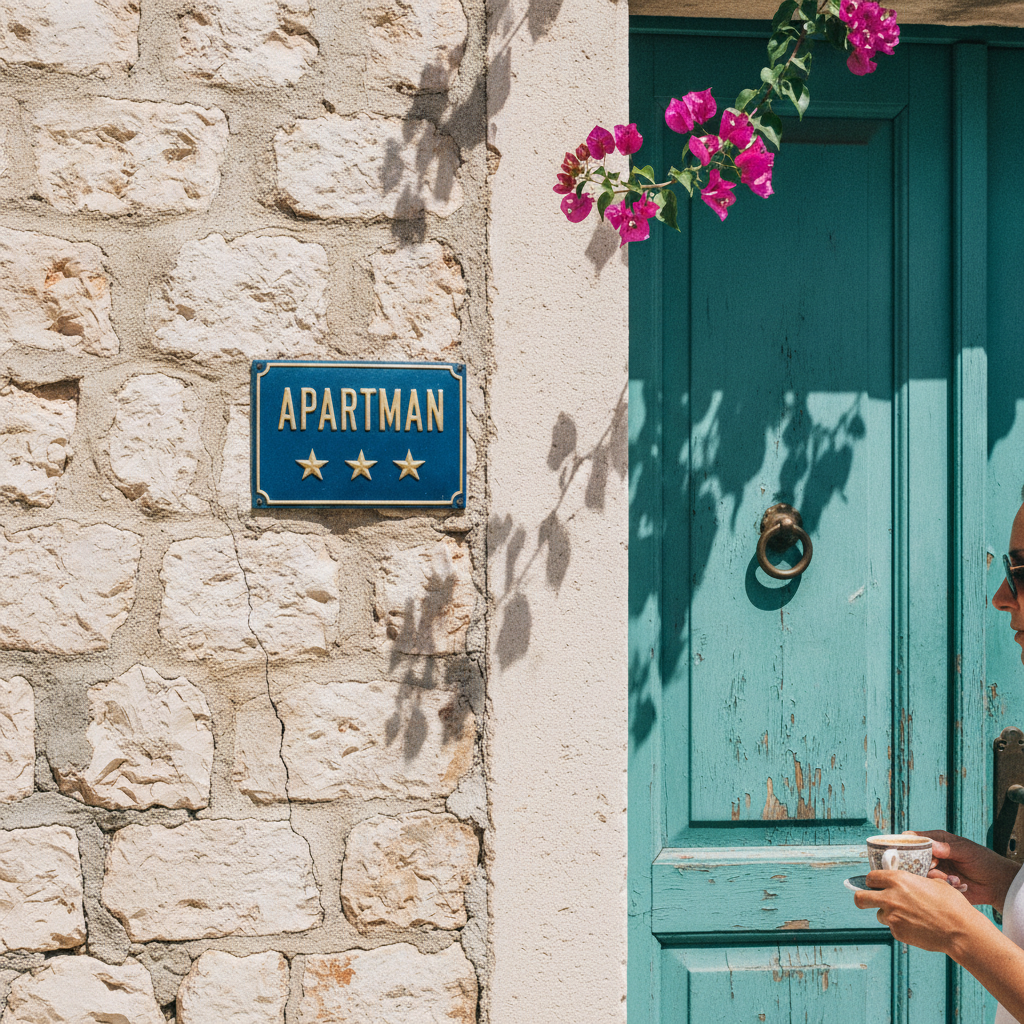
Although the inspection may seem extensive, inspectors most often focus on a dozen key items that form the backbone of a legal operation. Preparing these elements in advance can solve 90% of potential problems.
Here is a list of the 10 most commonly checked items:
- 1 Permit to Provide Services (Categorization Permit): The inspector will ask for the original or a certified copy. This is the foundational document of your business.
- 2 Standardized Plaque: A standardized plaque indicating the type and category of accommodation must be visibly displayed at the entrance of the property. The cost to produce a plaque is typically between 30 and 50 EUR.
- 3 Guest Registration in eVisitor: The inspector checks whether you are registering guests within the legal deadline of 24 hours of arrival and checking them out on their departure day. This is one of the most common and easily verifiable violations.
- 4 Price List of Services: A price list must be displayed in each accommodation unit. It must include all services you offer, with prices in EUR. If you are not in the VAT system, the invoice must include a note about the VAT exemption, for example, "Exempt from VAT under Art. 90 of the VAT Act."
- 5 Issuing Invoices: You must issue an invoice for every service provided. The inspector may check if you have issued an invoice to the guest currently staying at the property.
- 6 Compliance of the Actual Property State with the Permit: This is a critical point. The number of beds (primary and auxiliary) in the apartment must be identical to what is stated in the Categorization Permit. Any discrepancy is considered a serious violation.
- 7 Traffic Ledger (Evidencija o prometu): Although flat-rate taxpayers do not keep traditional business books, they are required to maintain a Traffic Ledger (form EP). All issued invoices are recorded in it.
- 8 Notice on How to File a Consumer Complaint: A notice explaining how a guest can file a written complaint must be displayed in the property.
- 9 First-Aid Kit: Every property must have a properly equipped first-aid kit.
- 10Evacuation Plan and Fire Extinguisher: Emergency instructions and an evacuation plan must be displayed in a visible place in each unit. The validity of the fire extinguisher certificate is also checked.
— 02Fines in 2026 and Common Host Mistakes
Fines for violations in the hospitality sector range from several hundred to thousands of euros, depending on the severity of the offense. Most common violations are administrative and easily avoidable, yet they constitute the majority of all fines issued. These include late eVisitor registrations, failing to display a price list, or advertising more capacity than permitted.
According to the Act on Hospitality and Catering Industry, fines are clearly defined [2]. Failure to register or late registration of tourists in the eVisitor system is a violation under the Tourist Tax Act, for which fines are prescribed. Advertising and renting with more beds than stated in the permit is considered an unregistered business activity and carries significantly higher penalties.
Fines
For violations like late registration or extra beds
Severity of Violation
Affects the final fine amount
8 Days
Deadline to appeal a misdemeanor order
The amounts of fines for specific violations are prescribed by the Act on Hospitality and Catering Industry and related regulations. Fines range from several hundred to several thousand euros, depending on the severity of the violation. For accurate and up-to-date information on fine amounts, it is necessary to consult the current legal texts in the Narodne novine (Official Gazette).
— 03Communicating with an Inspector: What to Say and What to Avoid
During an inspection, it is crucial to remain professional, cooperative, and calm. Provide all requested documents without delay and answer questions directly and accurately. Avoid making excuses, negotiating, having emotional reactions, or offering informal "solutions." The inspector is simply doing their job according to predefined rules.

Your attitude can significantly influence the course of the inspection. Politeness and a willingness to cooperate leave a positive impression and can contribute to a more constructive resolution of any minor deficiencies. On the other hand, obstructing an inspection can lead to additional sanctions.
What to Do:
- Be available: Ensure that you or an authorized person is present during the inspection.
- Prepare your documentation: Keep a folder with all relevant documents (Permit, Traffic Ledger, certificates) in one place.
- Answer accurately: Provide short and precise answers to the questions asked.
- Cooperate: Allow the inspector unimpeded access to all rooms listed in the permit.
- Read the record carefully: Before signing, read everything stated in the official record. If you disagree with an item, you have the right to add a note.
What to Avoid:
- Arguing and lecturing: Do not get into a debate about the interpretation of the law. The inspector acts according to instructions.
- Making excuses: Statements like "I didn't know" or "I was just about to fix that" do not absolve you of responsibility.
- Nervousness and panic: Stay calm. Panic can lead to careless statements.
- Hiding information or rooms: Obstructing an official in the performance of their duties is punishable by law.
- Offering a bribe: This is a criminal offense and the worst possible move.
The best preparation for an inspection isn't learning excuses, but running your business properly throughout the year. Automating guest registration and communication processes significantly reduces the risk of human error.
— 04Tourism vs. Tax Inspection: Key Differences
The Tourism Inspection primarily oversees compliance with the Act on Hospitality and Catering Industry, focusing on categorization, guest registration, and service quality. The Tax Inspection, on the other hand, exclusively controls financial operations: payment of the flat-rate tax, VAT (if applicable), and the correctness of issued invoices.
It is important to understand that these are two separate bodies with different jurisdictions. A visit from one inspection does not preclude a visit from the other. Tourism inspectors are part of the State Inspectorate of the Republic of Croatia [3], while tax inspectors are part of the Tax Administration of the Ministry of Finance [4].
| Criterion | Tourism Inspection (State Inspectorate) | Tax Inspection (Tax Administration) |
|---|---|---|
| Main Focus | Service quality, guest safety, compliance with categorization. | Financial discipline, payment of taxes and contributions. |
| What Do They Check? | Permit, plaque, eVisitor, price list, number of beds, complaints, evacuation plan. | Traffic Ledger (EP), issued invoices, flat-rate tax payments, tourist board fees. |
| Key Document | Categorization Permit (Rješenje o kategorizaciji) | Traffic Ledger, RPO form, tax payment slips. |
| Legal Basis | Act on Hospitality and Catering Industry, Tourist Tax Act. | General Tax Act, Income Tax Act, Fiscalization Act. |
BookiApp Data
From an analysis of host inquiries, the BookiApp Team has observed that about 70% of uncertainties relate to administrative obligations monitored by the tourism inspection, while 30% pertain to tax and financial aspects. This shows how important it is to know the differences in jurisdiction.
— 05What if You Get a Fine? A Guide to the Appeals Process
If you believe a fine is unjustified, you have the right to object to the inspection record on the spot or file an appeal against the misdemeanor order within the legal deadline of 8 days. The appeal is submitted to the authority that issued the order (e.g., the State Inspectorate), and the competent misdemeanor court makes the final decision.
It is important to act quickly and within the legal deadlines. The first step is to carefully analyze the inspection record and the misdemeanor order. If you find a factual or procedural error, this forms the basis of your appeal. It is advisable to consult with a lawyer to draft the appeal, especially if larger fines are involved.
The process is as follows:
- 11 Inspection Record: The inspector drafts a record. If you disagree with its contents, you can refuse to sign or sign with a written objection. This is your first opportunity to defend yourself.
- 12 Misdemeanor Order: Based on the record, a misdemeanor order is issued with a description of the violation and the fine amount. The order is delivered to you in person or by mail.
- 13 Option to Pay a Reduced Fine: If you pay two-thirds (2/3) of the imposed fine within 8 days of receiving the misdemeanor order, the fine will be considered paid in full, and you waive your right to appeal. It's important to note that, according to legal amendments, this option is not available if you decide to appeal and lose in court—in that case, the full amount must be paid.
- 14 Filing an Appeal: If you decide to appeal, you must do so within 8 days of receiving the order. The appeal must be in writing and include the order number, the reasons for contesting it, and any evidence you may have.
- 15 Court Proceedings: The appeal is forwarded to the competent misdemeanor court, which makes the final decision. The court can acquit you, uphold the fine, or modify it.
Running your business properly is the best prevention. Using digital tools for managing bookings and guest communication, like those offered by BookiApp, helps automate many obligations, reducing the risk of oversights that can lead to fines.
Sources
Frequently asked questions
1Does the apartment owner have to be present during an inspection?
Not necessarily. An authorized person (with power of attorney), such as a family member, property manager, or agency employee, can also be present. It is important that this person has access to all necessary documents and areas of the property.
2Do tourism inspectors always announce their visits?
No, inspections are generally conducted without prior notice to assess the actual situation. The inspector is required to show their official ID and badge before starting the inspection. You should always be prepared.
3Do inspectors check reviews on platforms like Booking.com or Airbnb?
Directly checking reviews is not the primary focus of a tourism inspection, but recurring negative comments related to safety, cleanliness, or false advertising (e.g., non-existent amenities) can trigger a targeted inspection.
4What happens if an inspector finds a minor deficiency?
For minor deficiencies, such as an outdated price list or small discrepancies, the inspector may issue a verbal warning or a decision ordering the correction of the deficiency within a specified period (e.g., 8 or 15 days), without imposing a fine.
BookiApp Tim
Vacation Rental Guest App
The BookiApp Team combines the experience of active rental owners with analytical market insights. We write practical guides for small-scale hosts of apartments, villas, and rooms—no fluff, just concrete numbers and verified sources.
Related articles

Vacation Rental Insurance: What Airbnb and Booking Don't Cover (2026)
Think Airbnb AirCover or Booking.com's insurance has you covered? Discover what these platforms miss, from guest liability to property damage, and what policy you actually need.
Read more
How to Get Guests to Book Direct and Save 18% on Commissions
A guide for vacation rental hosts in Croatia: Learn how to legally encourage guests to book direct, avoid Booking.com's 15-18% commission, and build a loyal guest base.
Read more